Desktop utility / local-first
Every AI limit. In view.
Provider Usage Monitor turns scattered subscription limits into one compact, always-on-top desktop surface.
5 providersOne glance
127.0.0.1 by defaultLocal boundary
Electron + Next.jsDesktop utility
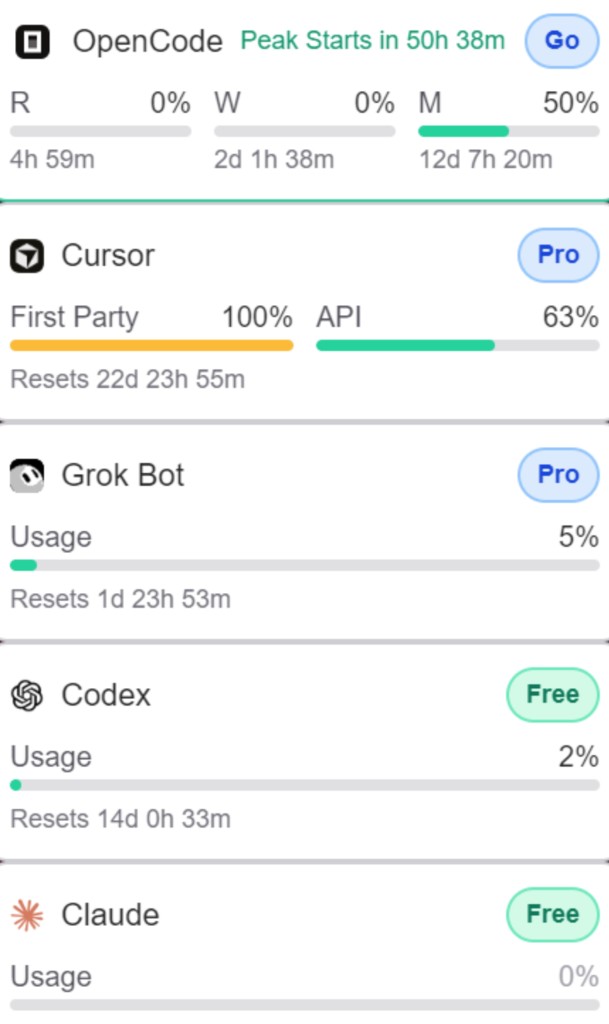
02 / ProductOne surfaceOpenCode, Cursor, Grok Bot, Codex, and Claude stay visible together. Smart rankingAvailable accounts rise up while exhausted windows move out of the way. Quiet by defaultA compact always-on-top widget gives you the signal without the dashboard noise.
Five providers. One glance.
Usage, plans, and reset windows stay visible before the next prompt, without opening five dashboards or hunting through config files.
Live provider view02 / Product
Account control02 / Settings
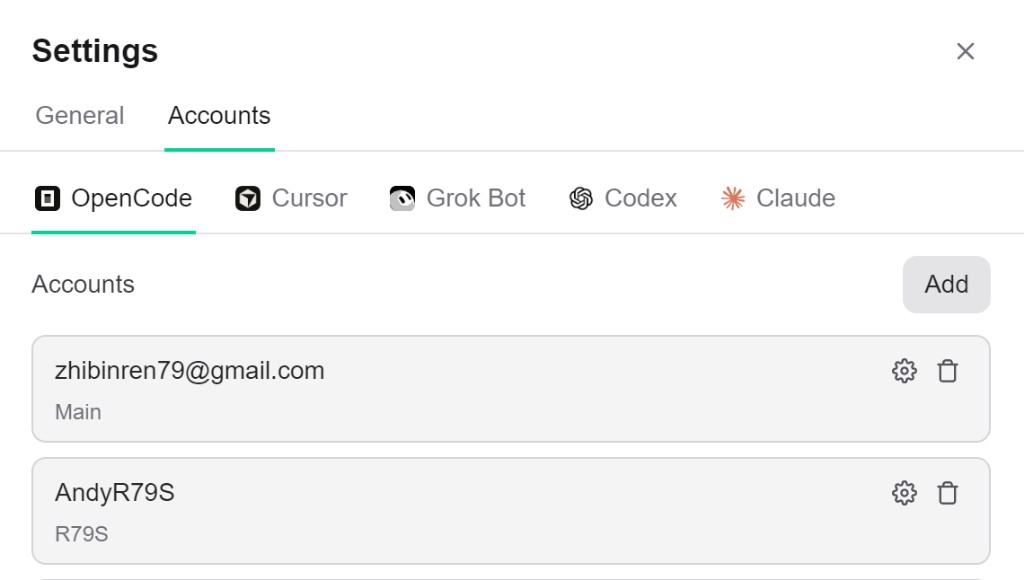
03 / SettingsManage accountsAdd, rename, inspect, or remove OpenCode accounts without editing files. Choose what stays visibleDisable providers or accounts without losing their place in the widget. Make it yoursUse provider names, nicknames, and light, dark, or automatic themes.
Control every provider locally.
Account management, provider toggles, display names, and widget preferences stay inside the desktop app.
Local by designCredentials are read from local app stores and never sent to a portfolio server.
04 / Boundaries
A focused utility with serious boundaries.
The stack keeps the interface small, the provider adapters replaceable, and the usage data behind a local desktop boundary.
Loopback service at 127.0.0.1Protected account and key writesQuiet empty states when a provider is unavailable
Latest hardening
Safer writes, reliable empty states, normalized billing dates, and duplicate-server protection.